
MADHAV TRADING COMPANY
GST : 06BSEPK6179B1ZT

Call us
+919716557110 08037734991
Call us
+919716557110 08037734991
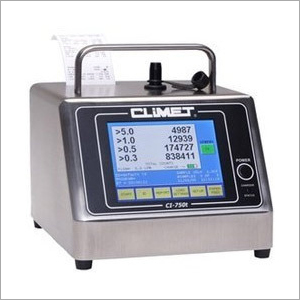

A particle counter service typically involves the measurement and analysis of particles in air, liquids, or other environments to assess the quality, purity, and safety of the surroundings. These services are often used in industries such as pharmaceuticals, cleanroom environments, manufacturing, food production, and research laboratories.
Heres a description of a typical particle counter service:
Particle counter services are essential for monitoring and maintaining the cleanliness and air quality of critical environments. These services utilize advanced particle counting equipment to detect and count particles of various sizes and concentrations, which can affect the safety, quality, and operational efficiency of a facility or production process. The service is critical in industries that require stringent cleanliness standards, such as pharmaceuticals, biotechnology, electronics, and semiconductor manufacturing.
Particle Size Analysis:
Detection and classification of particles based on size, typically ranging from 0.3 microns to 10 microns or larger, depending on the application.
Air Quality Monitoring:
Monitoring and analysis of airborne particles, ensuring that air quality meets the required standards for specific environments like cleanrooms, hospitals, and manufacturing plants.
Calibration and Maintenance:
Regular calibration of particle counters to ensure accurate measurements, along with ongoing maintenance services to ensure the proper functioning of the equipment.
Environmental Monitoring:
Continuous or periodic monitoring of the environment to detect contamination, assess cleanliness, and ensure compliance with industry regulations (such as ISO 14644 for cleanrooms).
Data Logging and Reporting:
Real-time logging of particle count data with detailed reporting, analysis, and trend monitoring. The data can be used to identify potential issues, track environmental performance, and comply with industry standards.
Customizable Solutions:
Tailored to meet the specific needs of a given facility, including on-site particle counting, remote monitoring, or data analysis. Services can be adjusted for different types of contaminants and environments.
Regulatory Compliance:
Ensuring compliance with industry-specific regulations and standards, including ISO, FDA, GMP, and other local or international regulations governing air quality and contamination control.
Consultation and Recommendations:
Providing expert consultation services to help improve particle control measures, optimize airflow, or improve contamination control systems based on the monitoring results.

Price:

 Send Inquiry

